Local Food Aggregation Software: When 40 Producers Sell as One
What local food aggregation software has to handle when dozens of small producers sell as one supplier, from weekly availability to producer payouts.
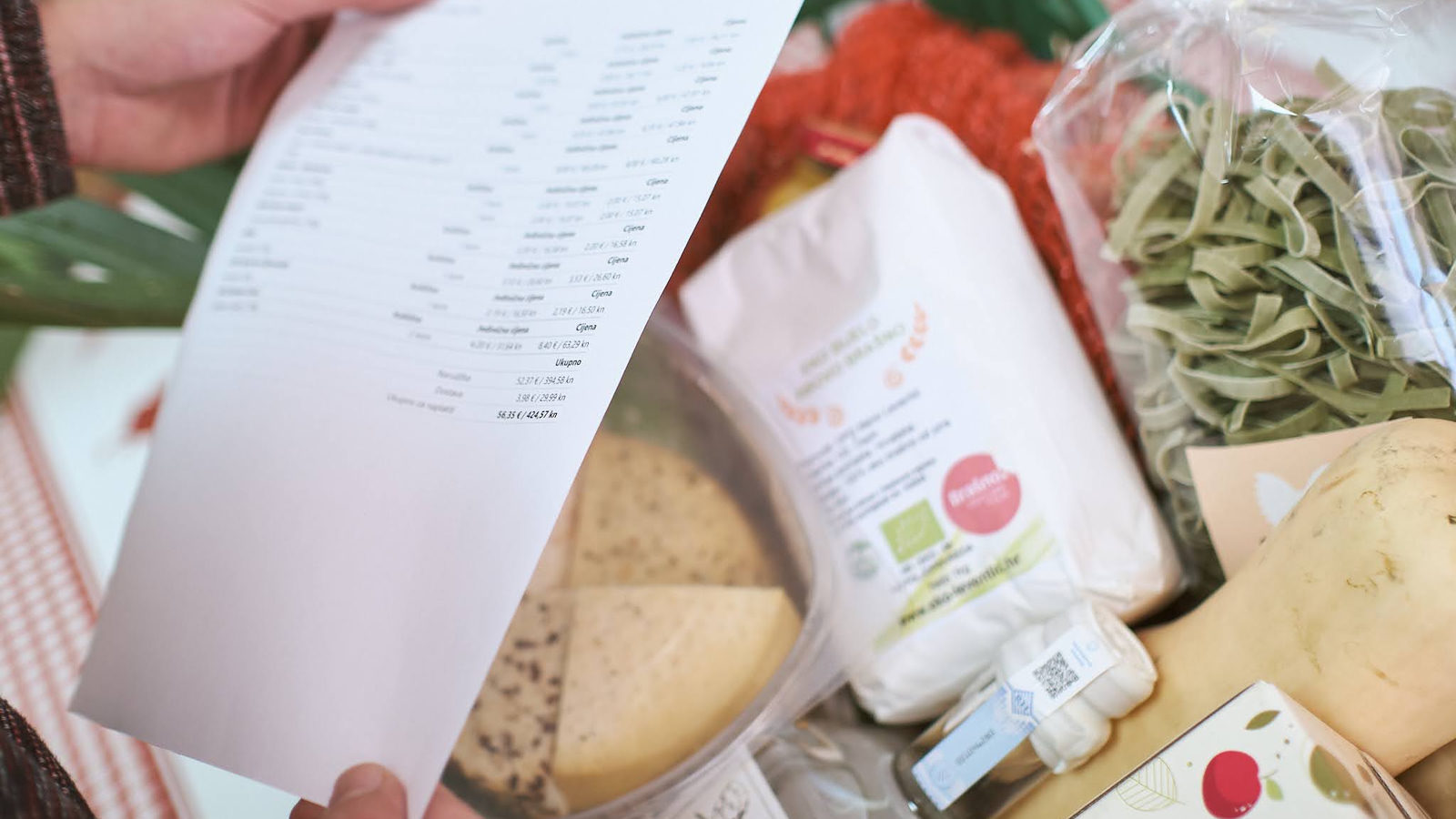
Local food aggregation software lets many small producers sell as one supplier: it collects what each grower can offer this week, presents it as a single catalogue, splits every order back into per-producer pick lists, and settles each producer's share of the money. If a tool does only the first and last of these, it is a webshop with a spreadsheet behind it, and the spreadsheet is where your week will go.
This guide sets out what the software actually has to handle when 40 producers sell under one name, based on what we have learned running a short food supply chain with more than 250 Croatian producers over six years.
What is local food aggregation software?
Local food aggregation software is the system a food hub or co-operative uses to combine stock from many local producers into one offer for buyers, then run the orders, packing, delivery and producer payments that follow. It replaces the shared spreadsheet, group chat and manual invoicing most hubs start with.
The definition of the business matters, because it shapes the software. The USDA describes a regional food hub as an organisation that "actively manages the aggregation, distribution, and marketing of source-identified food products" from local and regional producers. Two words in that sentence carry most of the software requirements: aggregation, and source-identified. The buyer sees one shop, but every carrot still has to be traceable to the farm that grew it.
In the EU the model is also shaped by rural development funding. Support for short supply chains under the rural development rules covers only chains with "no more than one intermediary between farmer and consumer". The hub is that one intermediary, so the software has to keep the producer visible at every step, not hide it behind a wholesale catalogue.
How does aggregation turn 40 producers' stock into one offer?
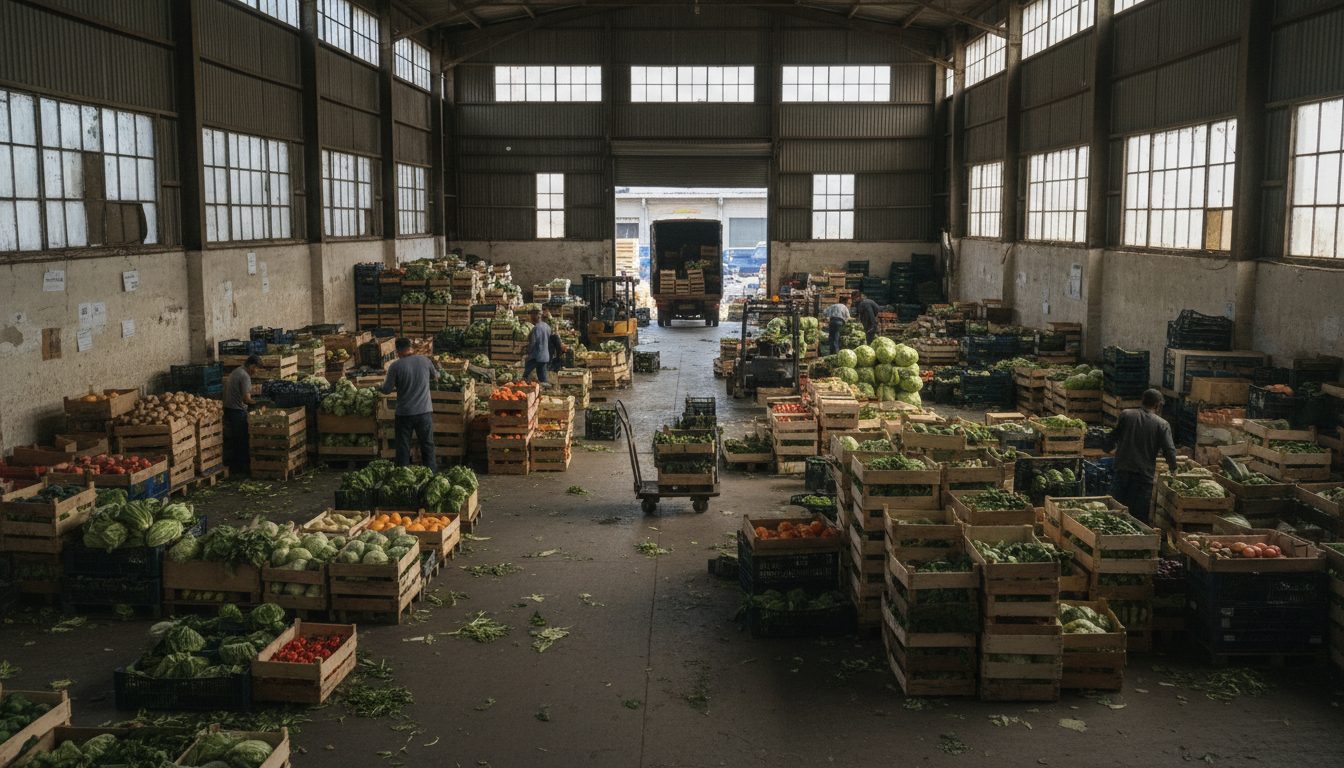
Aggregation software collects each producer's availability for the coming week before a fixed cut-off, merges identical products from different growers into one listing, and keeps a per-producer quantity behind it. Buyers see "potatoes, 1 kg"; the system knows which three farms can supply how many kilos each.
This is the step generic e-commerce tools miss. A standard shop has one stock number per product. An aggregating hub needs a stock number per product per producer, refreshed every week, with rules for who gets an order when several growers offer the same thing. Common rules are rotation (spreading orders evenly), priority for a producer who committed volume in advance, and filling the nearest farm to a collection point first. Whatever you choose, the software has to apply it automatically, because nobody can allocate 300 order lines by hand on a Thursday night.
The weekly availability round is where most hubs lose time. Producers declare stock by phone, text or a form, often late, and someone types it in. Good aggregation software gives producers a simple way to declare their own quantities and prices, reminds them before the cut-off, and closes the round on time. We describe how this works in practice in how producers declare next week's availability.
It also has to handle variable-weight goods. A buyer orders "about 1 kg" of courgettes and receives 1.12 kg. The catalogue, the order total and the producer's payout all need to follow the weight actually packed, not the weight ordered.
What happens to one order after the buyer pays?
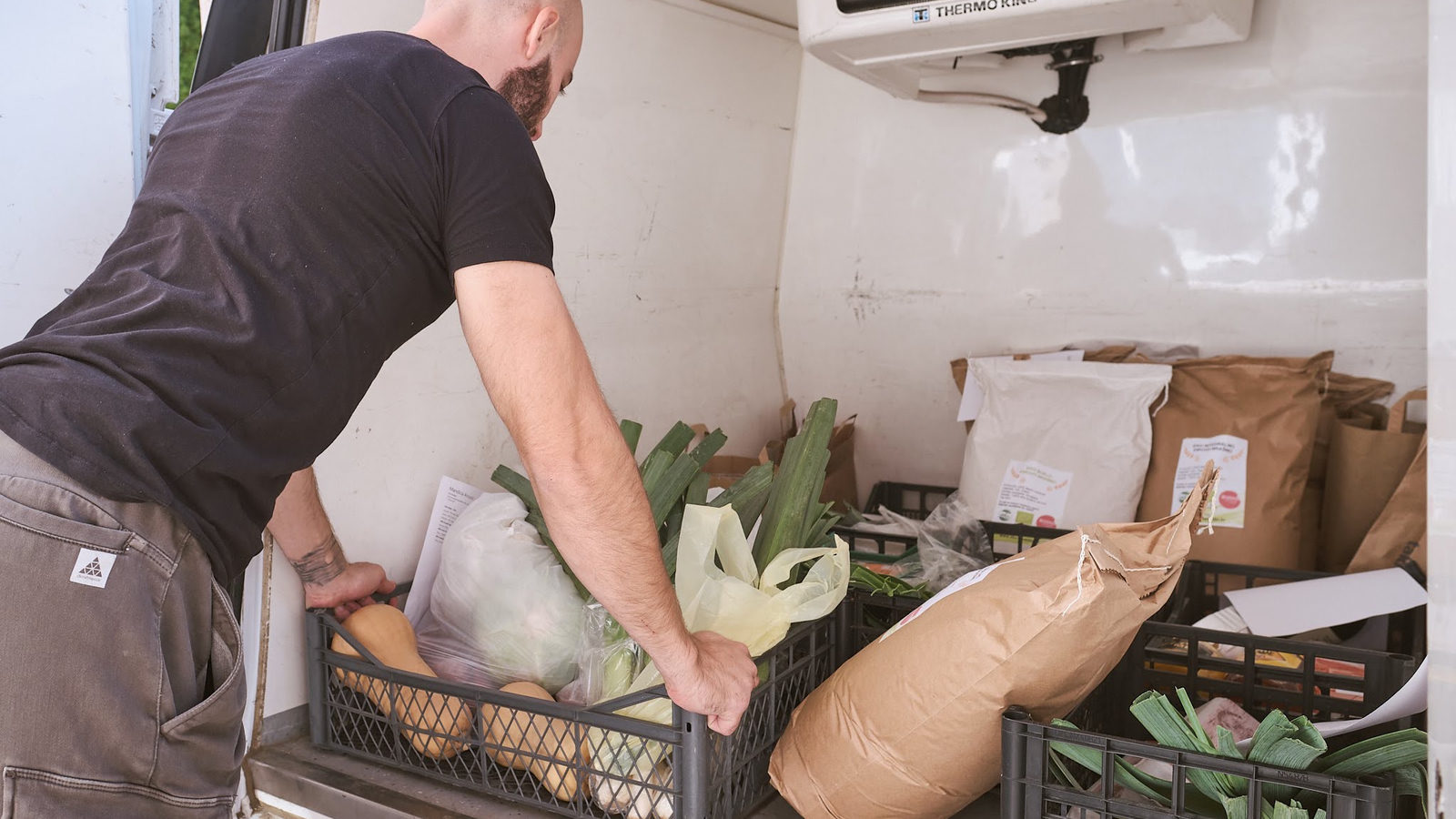
After checkout, aggregation software splits each basket into lines per producer, produces a pick list for every farm and a packing list for the hub, and keeps the link between each line and its grower so shortages, substitutions and refunds land on the right account.
A single household basket in a hub can contain products from eight or ten farms. On packing day that basket exists in several places at once: as a line on each producer's harvest list, as a crate at the packing point, and as a stop on a delivery route. The software has to hold all three views of the same order and keep them in step.
Shortages are the hard case. A hailstorm or a slow week means a producer delivers 20 kg of tomatoes against 26 kg ordered. The system should let the hub record the short delivery, decide who goes without or who gets a substitute from another grower, refund or adjust the affected buyers, and pay the producer only for what arrived. If this runs through a spreadsheet and email, refunds are late, producers are paid for goods they did not deliver, and buyers stop trusting the weekly box.
Orders also arrive outside the webshop: by phone, from a restaurant on a standing order, from a school kitchen. Aggregation software is only useful if those orders enter the same pick lists, rather than being added on paper at the packing table.
How does the software handle packing and delivery?
For packing and delivery, aggregation software turns the week's orders into per-farm collection lists, labelled crates per buyer and an ordered delivery route, so drivers and packers work from the same data as the shop and the accounts.
Collection comes first: someone drives the farms or the farms drop off at a hub, and every intake needs to be checked against what was ordered. Then each buyer's order is packed and labelled, and the labels need to match the route order so the last crate loaded is the first one delivered. Finally, the route itself: delivery windows, addresses, notes for the driver, and proof of delivery. The hub only knows whether its week went well once all three are recorded in one place. More detail on the routing side is in our piece on planning delivery routes for a local food co-operative.
How does aggregation software pay each producer?
Aggregation software calculates each producer's payout from what they actually delivered in a period, at their agreed price, minus the hub's commission or fees, and produces the documents both sides need for their own accounts. This is the part most hubs still do by hand, and the part producers care about most.
A producer's payout is not "their share of sales". It is the delivered quantity of each product, at the price that producer set, after shortages, quality rejections and refunds, minus the hub's margin. The software has to keep that ledger per producer and per period, and the producer should be able to see it without asking. Transparency here is what keeps growers in a co-operative.
Settlement also has to fit local tax rules. In Croatia, for example, a family farm (OPG) and a registered company are invoiced and paid differently, and VAT status varies between producers in the same box. The software should know each producer's status and produce the right document for each, then export the period to the hub's accounting system.
When you evaluate a tool, ask for one concrete thing: a sample payout statement for a producer who had a short delivery and a refund in the same week. If the vendor can show it, the rest of the system is usually built around the producer. If they can't, it isn't.
Key takeaways
- Aggregation software combines many producers' weekly stock into one offer while keeping every product traceable to its farm.
- Stock is tracked per product per producer, with automatic rules for who supplies each order.
- Every basket is split into per-producer pick lists, crates and delivery stops that stay linked.
- Shortages, substitutions and refunds must reach the right buyer and the right producer.
- Producer payouts follow what was actually delivered, at each producer's own price, minus the hub's fees.
If you are still running all of this on spreadsheets, our six-week migration plan for moving a food co-op off spreadsheets shows the order we move each part across, and Plodie is the platform we built to run these steps in four connected apps for administrators, shoppers, producers and drivers.
FAQ
What is the difference between a food hub platform and a normal online shop?
A normal online shop assumes one seller with one stock count per product. A food hub platform tracks stock per producer, splits each order between several farms and pays each producer separately. Without those three, a multi-producer hub ends up doing the producer side in spreadsheets.
Can a small food co-operative use Shopify or WooCommerce?
It can start there, and many do. The problems appear at the second or third producer: shared stock, split pick lists, per-producer payouts and variable weights all need plugins or manual work. Most co-operatives move to purpose-built software once weekly orders reach a few hundred lines.
How do producers enter their availability in aggregation software?
Usually through a simple producer app or form, where each grower enters next week's products, quantities and prices before a fixed cut-off. The software then merges identical products into one listing for buyers. Reminders before the cut-off matter more than features.
What should food hub software do when a producer delivers less than ordered?
It should record the short delivery, let the hub choose a substitute or cancel the affected lines, refund or adjust the buyers' totals, and pay the producer only for what arrived. All of this should happen in the same system as the order, not in a separate spreadsheet.
Do short food supply chains in the EU have a legal definition?
Yes. EU rural development rules define short supply chains, and support for them covers only chains with no more than one intermediary between farmer and consumer. A food hub acting as that single intermediary still has to keep each producer identifiable to the buyer.
Sources
- NC State Extension, Selling to Food Hubs in North Carolina (USDA definition of a regional food hub)
- Commission Delegated Regulation (EU) No 807/2014, Article 11 (short supply chains, no more than one intermediary)