Why Shopify Breaks at the Second Producer: Payouts, Stock and Pickup Slots When 40 Growers Share One Storefront
A single-merchant storefront works for one farm and breaks at the second. Here are the six points where Shopify fails a multi-producer farmers market, the workarounds operators try, and what the operation actually needs.
Shopify works fine for one farm. What changes at the second producer?
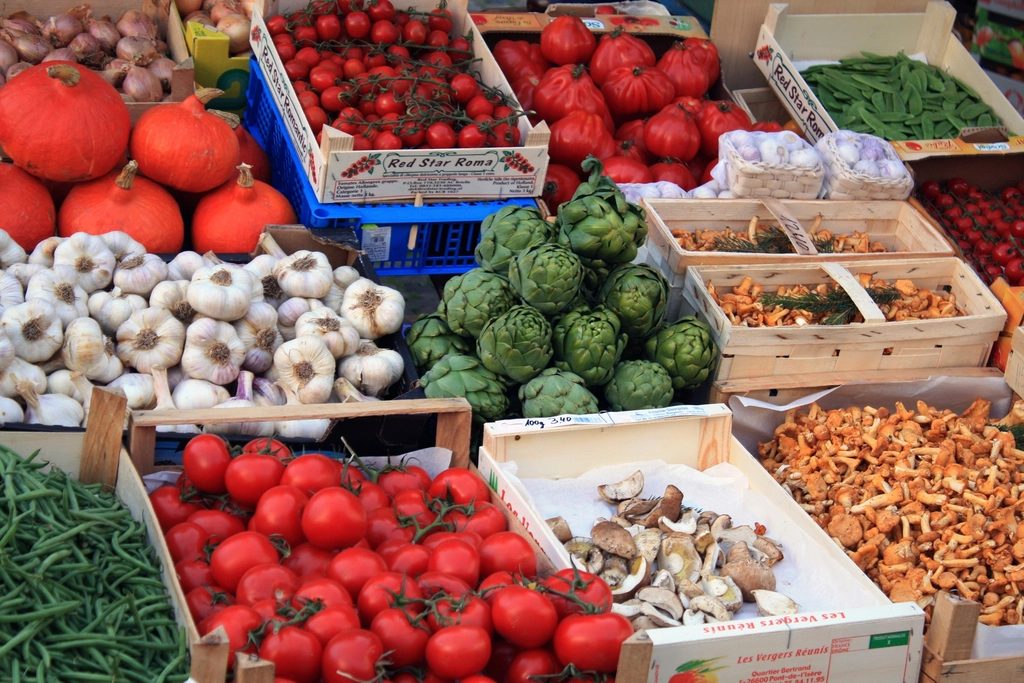
A single-merchant storefront assumes one seller, one inventory, one bank account and one fulfilment point. Add a second producer and every one of those assumptions splits in two: the basket now contains goods from two businesses that must be picked separately, paid separately, and confirmed separately.
This is not a theme or plugin problem. It is a data model problem. In a single-merchant store, a product belongs to the store. In a market, a product belongs to a producer, and the producer is an economic actor with their own availability, their own price, their own commission rate and their own payout. The moment you need to answer "how much does Ivan get paid this week and for exactly which lines," you are asking a question the storefront has no field for.
Most operators do not discover this at setup. They discover it in week three, when the first real Saturday order run happens and the spreadsheet reappears next to the shop admin, quietly doing the actual work.
Failure point one: one basket, many producers, and the pick list that does not exist
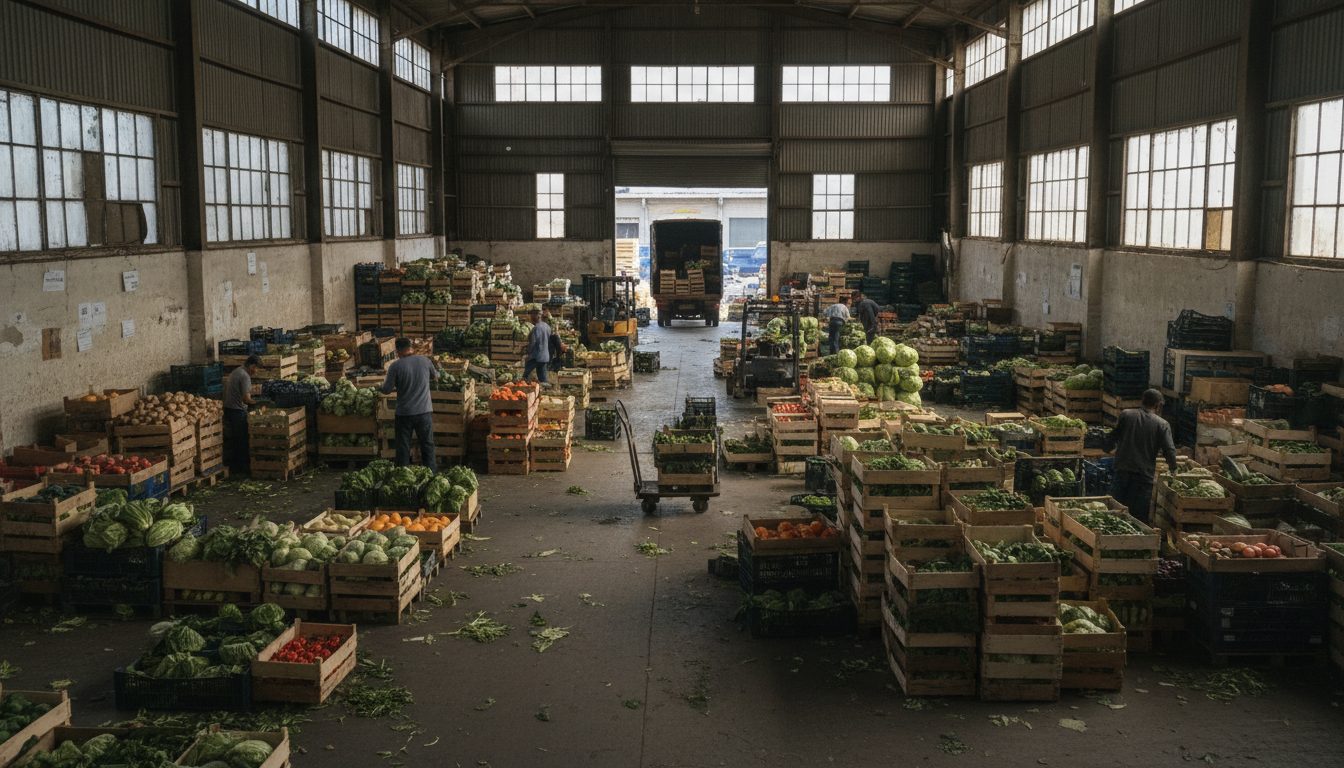
A shopper fills one basket with eggs from one farm, cheese from another and apples from a third. The storefront generates one order and one packing slip. What the market needs is three producer-specific pick lists, plus one consolidated shopper basket at the pickup point, generated from the same order.
The usual workaround is to tag products by producer and export the day's orders to a spreadsheet, then pivot by tag to get per-producer lines. It works for twenty orders. At a hundred orders across forty producers it becomes a manual re-export every time an order is edited, cancelled or a substitution is agreed, and the version the producer received by email on Thursday morning is no longer the version being packed on Friday.
What the operation actually needs is a single order that projects two ways at once: aggregated by producer for supply, and aggregated by shopper for handover. Both views have to update from the same source when anything changes, and the producer view has to be reachable by the producer without going through the operator's inbox.
Failure point two: variable weight. A cabbage priced per kilo cannot settle in a fixed-price cart
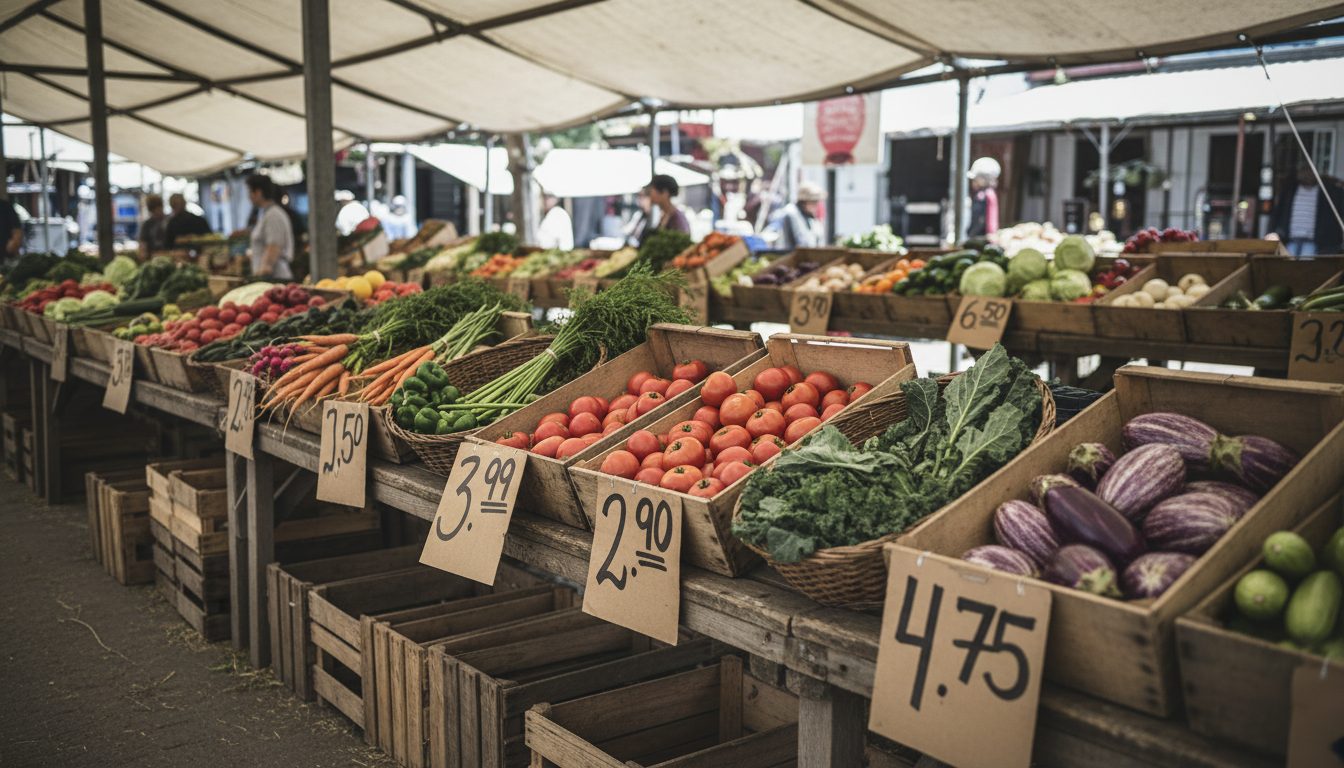
A fixed-price cart charges at checkout. Weighed goods are only known after picking. A 1.2 kg cabbage sold at a price per kilogram means the charged amount and the final amount differ, so the platform needs to authorise an estimate at checkout and settle the real figure after weighing.
Operators try three workarounds and all three leak. Selling in fixed units ("one cabbage, medium") pushes the loss onto whoever grades the produce and produces complaints about size. Selling in 100 g increments makes the shopper do arithmetic and gives you a basket of 12 x 100 g items on the pick list. Charging an estimate and refunding the difference manually means somebody reconciles refunds by hand every delivery day, and card refunds are slow and fee-bearing.
The mechanic that works is an ordered quantity, an actual picked quantity, a tolerance band the shopper agrees to at checkout, and a settlement step after picking that adjusts the capture up or down within that band. That also has to flow through to the producer's payout line, because the producer is paid on what was actually supplied, not on what was ordered.
Failure point three: stock lives on a farm, not in a warehouse, and it changes on harvest morning
Warehouse inventory decrements when an item ships. Farm availability is a forecast that the grower revises the morning they pick. A market platform needs producers to declare or confirm availability per order window, not a global stock number that the operator maintains on their behalf.
In a single-merchant store, only the store admin can edit stock. So the operator becomes a data entry clerk: forty phone calls or WhatsApp messages on Wednesday, forty inventory edits on Wednesday evening, and a second round of edits Friday morning when three producers report rain, a broken cooler and a smaller pick than expected. Every hour of delay between the farm's reality and the storefront's number is an hour in which shoppers buy things that do not exist.
The alternative is a producer-facing availability screen tied to the current order window: open quantity, confirm quantity, mark sold out, propose a substitution. Oversell handling then becomes a defined path (short the line, refund it, offer a swap) rather than an apologetic email from the operator on delivery morning.
Failure point four: commission, invoicing and paying forty people from one Stripe account
One payment account collects one gross sum. A market has to split that sum into forty net payouts, each with its own commission rate, its own returns and shortfalls, and its own paperwork. A single-merchant storefront has no concept of a payee other than the store, so this reconciliation happens outside the software or not at all.
The workaround is a monthly spreadsheet: export orders, filter by producer tag, subtract the commission, subtract the items that were short-supplied or refused at handover, add any delivery fee arrangement, then pay by bank transfer and hope nobody disputes a line. It is the single most common reason operators eventually replace the storefront, because it scales linearly with producers and it is the part where errors damage trust fastest.
What the operation needs is per-producer commission rules, payout statements a producer can open and check line by line, and a clean answer to who is the seller of record for tax purposes. That last question decides whether the market invoices the shopper and pays producers as suppliers, or whether each producer invoices the shopper and the market charges a service fee. Both models are workable. Neither is expressible in a single-merchant admin.
Failure point five and six: order windows and producer logins
E-commerce is 24/7 checkout with rolling fulfilment. A market runs in cycles: orders open Monday, close Wednesday at 18:00, producers confirm Thursday, delivery or pickup happens Saturday between 09:00 and 12:00 at three locations with capped slots. The storefront has no cut-off, no cycle and no slot capacity, so operators fake it with manual open and close.
The faking is where it breaks. Someone has to unpublish the shop at the cut-off and republish it after, and the one week they forget, orders land after pick lists have gone out. Delivery slots get simulated as free "products" or shipping rates with no capacity limit, so eleven people choose the 09:00 pickup at a location that can handle six. And because the producer has no login, they cannot see the window, confirm their lines, or flag a shortfall without the operator relaying messages.
Giving producers their own account is not a convenience feature. It changes who owns the truth about supply. When the grower confirms what they can actually deliver, the operator stops being the bottleneck for every change, and the order that reaches the driver reflects what is really in the crate.
- Market requirement: multi-seller basket. Single-merchant storefront: one order, one packing slip, per-producer split done by spreadsheet export. Multi-producer platform: one order projected as per-producer pick lists and per-shopper handover lists from the same record.
- Market requirement: variable weight. Storefront: fixed price only, manual refunds. Platform: ordered vs picked quantity with post-pick settlement inside an agreed tolerance.
- Market requirement: farm availability. Storefront: global stock edited by the admin. Platform: producer confirms availability per order window, with defined shortfall handling.
- Market requirement: per-producer payouts. Storefront: one payout to the store, commission reconciled offline. Platform: per-producer commission rules and checkable payout statements.
- Market requirement: order cycles and capped slots. Storefront: always-on checkout, manual open and close. Platform: cut-off times, confirmation phase, capacity-limited pickup and delivery slots.
- Market requirement: producer access. Storefront: admin-only editing. Platform: producer login with their own catalogue, availability and payout history.
When a single storefront is still the right call, and when to switch
A single-merchant storefront is the right choice when one legal entity buys the goods, holds the stock and sells them under its own name. A box scheme that buys from farms and resells is a shop. A market where forty independent producers each sell their own goods is not, and no amount of tagging changes that.
Practical signals that you have crossed the line: you are exporting orders to a spreadsheet after every cycle, you are editing stock on behalf of producers, you are calculating commission by hand, or you are answering "what do I owe you this month" from memory. Any one of those is survivable. Two or three at once means the software has stopped being the system of record and the spreadsheet has taken over, which is the state most operators are in when they start looking for alternatives.
Build versus buy comes down to the same list. Everything above is buildable on top of a headless commerce stack, and it is roughly six systems of work: catalogue with producer ownership, availability by order window, weight settlement, split payouts, cycle and slot scheduling, and role-separated apps for admin, shopper, producer and driver. Plodie exists because we ran a market first, hit each of these in turn on Plodovi.hr, and concluded they were product requirements rather than edge cases.
Key Takeaways
- Single-merchant e-commerce assumes one seller, one inventory and one payout. A market breaks all three at the second producer.
- The six concrete failure points are multi-seller baskets, variable-weight settlement, farm-side availability, per-producer commission and payouts, order cut-off cycles with capped slots, and producer logins.
- Every workaround (product tags, spreadsheet exports, manual open and close, hand-calculated commission) scales linearly with the number of producers and fails around week three of live operation.
- The switching signal is simple: if orders leave the software for a spreadsheet after every cycle, the software is no longer your system of record.
- A storefront is still correct if one entity buys and resells the goods. It is wrong when producers sell under their own name.
For how these requirements turn into actual screens for each role, see One Platform, Four Apps, which walks an order from checkout through producer confirmation to the driver's route.
Frequently Asked Questions
Can't I just use a Shopify multi-vendor marketplace app instead?
Multi-vendor apps solve the vendor catalogue and the commission split reasonably well, which covers two of the six failure points. They generally do not solve variable-weight settlement after picking, availability declared per order window, cut-off cycles with capacity-limited pickup slots, or the per-producer picking and handover views. If your market sells only fixed-weight packaged goods with a fixed weekly routine, an app may carry you further than a bare storefront.
How much does it cost to set up online ordering for a farmers market?
Costs split into the storefront or platform subscription, payment processing fees, and the operator hours spent on reconciliation each cycle. The third one is usually the largest and the least visible: manual pick-list exports, stock updates on behalf of producers and hand-calculated payouts are recurring labour that grows with every producer you add. Compare options on total operator hours per cycle, not on monthly licence price alone.
Who is legally the seller when a market platform takes the payment: the market or the producer?
Both models exist and the choice affects invoicing, VAT treatment and payouts. In the reseller model the market buys from producers and sells to shoppers under its own name, issuing one invoice to the shopper. In the agency model each producer is the seller of record and the market charges a service or commission fee. Decide this before you configure payments, because it determines what your payout statements and invoices must contain, and confirm the treatment with a local accountant.
How do you handle it when a producer cannot supply what a shopper already paid for?
You need a defined shortfall path rather than an ad hoc email. The common options are to short the line and refund it, offer a substitution the shopper can accept or decline before packing, or reallocate the item to another producer who has stock in the same window. Whichever you choose, the refund or adjustment has to flow through to the producer payout so nobody is paid for goods that never arrived.
Do producers actually use a producer app, or will they keep sending messages?
Adoption depends on how little the app asks them to do. A grower will open a screen that shows this week's confirmed orders and lets them tap confirm, adjust or sold out in under a minute. They will not maintain a full product catalogue with photos and descriptions. In practice operators seed the catalogue once and producers only ever touch availability, price changes and payout statements.